
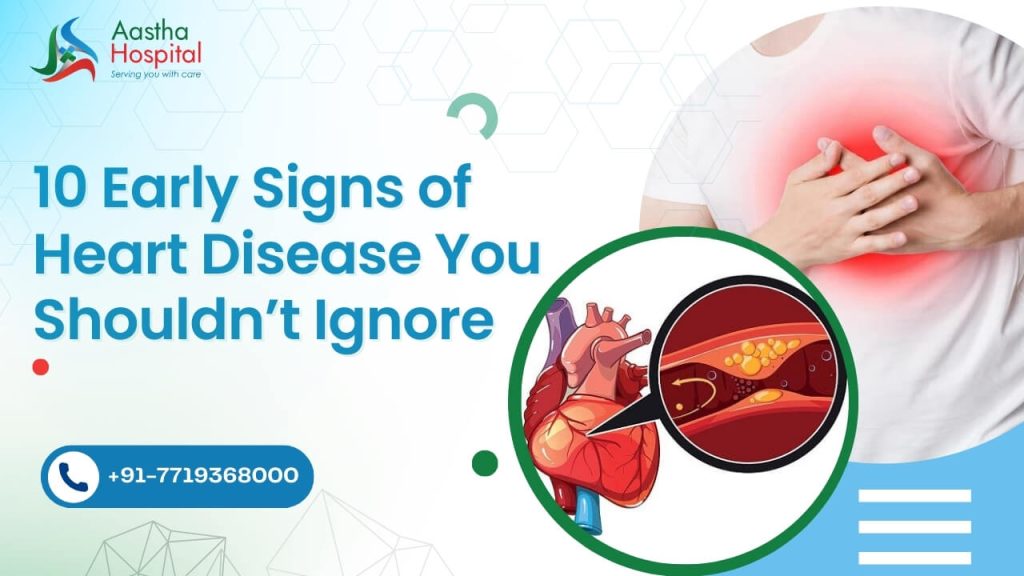
Even today, heart disease is among the major causes of death. The good news? Heart diseases occur with a great number of serious cases that grow progressively and manifest early warning signs. Early detection of heart disease can help you pursue preventive treatment early enough to avoid life-threatening conditions such as a heart attack or heart failure.
If you notice any of the following symptoms, the cardiology team at Aastha Hospital is here to help.
Below is the list of alarming signs that one should take care of to prevent heart problems:
Chest Pain or Discomfort
Chest pain is one of the most common heart attack warning signs. This can be in the form of pressure, tightness, burning, or squeezing of the chest.
It is sometimes brought about by the symptoms of angina, which is the inability of the heart muscle to get sufficient blood that is rich in oxygen because of coronary artery disease. Although chest pain may not be associated with the heart, the constant pain or the recurrence of the pain cannot be overlooked. If the pain persists for more than a few minutes or spreads to the arm, neck, or jaw, seek consultation at Aastha Hospital as soon as possible.
Shortness of Breath
Breathing difficulty when doing mild exercises or even resting may be an indication of a heart problem. With the heart having a hard time pumping blood effectively, it can produce a build-up of fluid in the lungs, resulting in difficulties in breathing.
The symptom is normally related to the warning signs of heart failure and other symptoms of cardiovascular diseases. A prompt consultation at Aastha hospital can assist you in identifying the root cause of the problem.
Exhaustion Which is not refuelled by rest
Weakness that may be unusual or with no apparent cause may be an initial sign of a cardiac illness. Heart issues before a heart attack cause many people, most of them, to complain of severe fatigue a few weeks before the heart attack.
In case the ordinary chores seem to be overwhelming without any apparent cause, it might point to the reduced supply of blood to the heart.
Atrial Fibrillation or Tachycardia
Do you feel that your heart is beating wildly, jumping, or skipping? The signs of arrhythmia might indicate mechanical issues in the heart.
Infrequent palpitations may not be of concern, but the persistent occurrences of irregular heartbeat need to be examined by a heart specialist present in Aastha Hospital, particularly when it is accompanied by lightheadedness or chest pains.
Swelling (Oedema) in Legs, Ankles, or Feet
The swelling (edema) may develop when the heart is not functioning properly, which leads to the accumulation of fluid in the lower body. This is usually associated with warning signs of heart failure.
In the case of swelling in addition to breathlessness or fatigue, it would be advisable to consult the doctor early enough. Routine checkups and preventive care at Aastha Hospital will allow you to monitor and manage effectively.
High Blood Pressure
High blood pressure is one of the greatest risk factors for heart disease. It is also referred to as a silent killer, and in most cases, it does not manifest itself, but it poses a strong possibility of a heart attack and stroke.
Knowing the dangers of having high blood pressure and tracking your numbers daily is the key to being healthy and having a long, healthy life.
Pain in Arms, Neck, Jaw, or Back
Suffering related to the heart does not necessarily have to be in the chest. The pain can be extended to the left arm, neck, jaw, shoulders, or upper back.
These are typical symptoms of early heart disease in both men and women, but the women may have uncharacteristic or milder symptoms.
Lightheadedness or Dizziness
Dizziness or light-headedness could develop due to insufficiency of the heart to pump blood to the brain. The occasional dizziness might have some minor causes; however, frequent occurrence of dizziness might be a serious warning sign of a heart problem.
Ask a doctor of Aastha Hospital to check you in case of dizziness accompanied by pain in the chest or palpitations.
Constant Coughing/ Wheezing
One of the possible signs of fluid in the lungs is a chronic cough, with white or pink sputum. This is usually accompanied by signs of heart failure.
In case respiratory symptoms do not show improvement after the usual treatment, then it is a warning sign.
Nausea, Sweat, or Indigestion -Like Symptoms
A minor number of heart attacks start with symptoms that look like digestive problems. Acidity may be confounded with nausea, cold sweats, or even a burning feeling in the upper abdomen. Such symptoms are especially common in women and should never be dismissed.
Why Early Detection Matters
The suspected factors of heart disease can trigger a severe heart attack, arrhythmia, or chronic heart failure if disregarded. Early detection will enable the physician to prescribe the relevant treatment, drugs and lifestyle modification in favour of the heart.
Preventive care includes routine screening and early cardiology consultation at Aastha Hospital, which helps to lower long term risks.
How to reduce your risk of heart disease
- Keep the blood pressure at normal values.
- Eat a low-sodium diet that is well-balanced.
- Actively exercise (a minimum of 30 minutes daily at least one day of the week)
- Quit smoking
- Manage stress effectively
- Maintain a healthy weight
- Have regular screenings of the heart.
The following health tips can reduce the chances of contracting coronary artery disease, among other heart diseases.
When to See a Cardiologist
When you have persistent symptoms like chest pains, breathlessness, or a feeling of palpitations, then do not wait before you consult a professional. An early cardiology check-up may reveal the underlying complications and avoid complications in the future.
It is always worth remembering that early intervention will save lives.
FAQs
Q1. What are the symptoms of heart disease?
Q2. Do men and women have different symptoms of heart disease in the early years of life?
Q3. Could heart disease be brought about by high blood pressure?
Q4. Where can I get a heart health checkup?
Final Thoughts
Early detection of the symptoms of heart disease can be the difference between a medical problem that is treated on time and a medical emergency. In case you experience some long-term or out-of-the-ordinary symptoms, you should care about your heart health and address a medical expert.
Your heart labours endlessly on your behalf — take care of it in return.